




 Send Inquiry
HUMAN EYE WITH LID
Price 110 INR/ Piece
HUMAN EYE WITH LID Specification
- Weight
- 0.5-1.5 Kilograms (kg)
- Product Type
- Human
- Application
- School, Medical College, Hospitals
- Color
- Natural
- Material
- PVC Plastic
HUMAN EYE WITH LID Trade Information
- Minimum Order Quantity
- 1 , , Piece
- Payment Terms
- Cash Advance (CA), Cash in Advance (CID)
- Supply Ability
- 100 Pieces Per Week
- Delivery Time
- 1 Week
- Sample Available
- Yes
- Sample Policy
- Sample costs shipping and taxes has to be paid by the buyer
- Main Export Market(s)
- Western Europe, Asia, Australia, Eastern Europe, Middle East, Central America, South America, North America, Africa
- Main Domestic Market
- All India
HUMAN EYE WITH LID About
An eyelid is a thin fold of skin that covers and protects the eye. With the exception of the prepuce and the labia minora, it has the thinnest skin of the whole body. The levator palpebrae superioris muscle retracts the eyelid to "open" the eye. This can be either voluntarily or involuntarily. The human eyelid features a row of eyelashes which serve to heighten the protection of the eye from dust and foreign debris, as well as from perspiration. "Palpebral" (and "blepharo") means relating to the eyelids. Its key function is to regularly spread the tears and other secretions on the eye surface to keep it moist, since the cornea must be continuously moist.Versatile Educational Tool
The Human Eye with Lid model serves as an essential teaching aid for educators and healthcare professionals. Its detailed design aids in visually explaining the anatomy of the eye and eyelid, making complex concepts more accessible to students and trainees. Its robust construction ensures longevity in frequent use environments.
Crafted for Realism and Durability
Manufactured using high-grade PVC plastic, this model is designed to accurately replicate natural anatomical features. The realistic coloration and precise detailing support effective learning, while the material ensures that the model withstands regular handling without compromising on structural integrity.
FAQs of HUMAN EYE WITH LID:
Q: How is the Human Eye with Lid model used in educational institutions?
A: This model is used as a hands-on teaching aid in classrooms and labs, helping students and trainees observe and understand the anatomy of the human eye, including its surrounding structures like the eyelid.Q: What are the main benefits of using PVC plastic for this anatomical model?
A: PVC plastic provides durability, is easy to clean, and offers the ability to replicate natural colors and textures closely, ensuring longevity and realism during repeated educational use.Q: When is the Human Eye with Lid model most effectively utilized in medical settings?
A: It is most effective during anatomy lessons, patient consultations, and practical examinations, where visual demonstrations can enhance understanding and retention of ocular anatomy.Q: Where can this model be purchased in India?
A: The model is available for purchase through a network of exporters, manufacturers, suppliers, traders, and wholesalers across India.Q: What is the process involved in manufacturing this eye model?
A: The model is produced using precision molding techniques with high-quality PVC plastic, followed by detailed painting to achieve a natural appearance. Quality checks ensure accuracy before distribution.Q: How does this model benefit teachers and medical professionals?
A: It provides a tangible, visual aid that simplifies the explanation of complex anatomical concepts, enhancing both practical learning experiences and professional demonstrations.Q: What is the recommended weight range for this model and why is it important?
A: The model weighs between 0.5 to 1.5 kilograms, ensuring it is sturdy for regular use while remaining light enough for easy handling and transportation between classrooms or demonstration areas.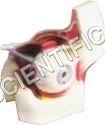

Price:
- 50
- 100
- 200
- 250
- 500
- 1000+

More Products in Human Anatomy Models Category
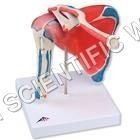
Joint Model
Price 120 INR / Piece
Minimum Order Quantity : 1 , , Piece
Usage : Industrial measurement
Weight : Approx. 4.5 kg
Type : Joint Model
Dimension (L*W*H) : 250 mm x 180 mm x 140 mm
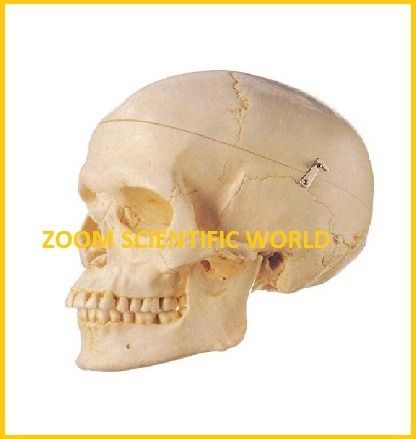
Adult Skull
Price 119 INR / Piece
Minimum Order Quantity : 1 Piece
Usage : Medical education, anatomical demonstration, teaching, study
Weight : Approx. 600800 grams
Type : Anatomical Model
Dimension (L*W*H) : Approx. 21 cm x 14 cm x 15 cm
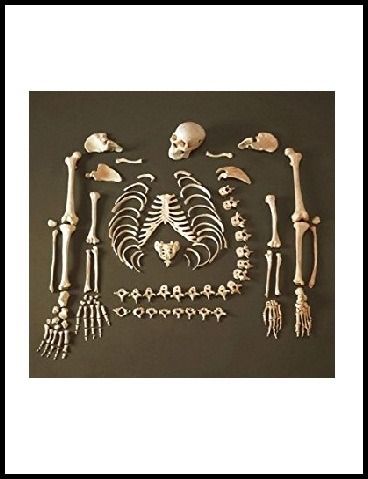
Disarticulated Human Skeleton (bilateral)
Price 124 INR / Unit
Minimum Order Quantity : 1 Unit
Usage : Educational, medical teaching, anatomy study
Weight : Approx. 8 kg
Type : Disarticulated Human Skeleton (Bilateral)
Dimension (L*W*H) : Varies with assembly (largest bone approx. 45 cm)
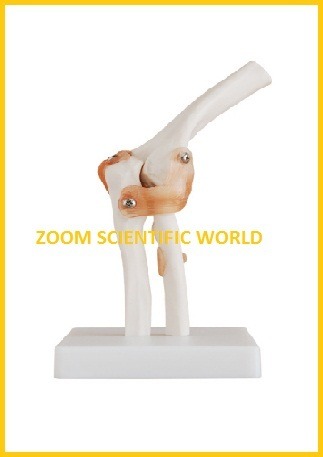
Elbow Joint with Muscles
Price 107 INR / Piece
Minimum Order Quantity : 1 Piece
Usage : Educational demonstration of elbow joint and muscle anatomy
Weight : Approx. 900 grams
Type : Anatomical Model
Dimension (L*W*H) : 30 cm x 15 cm x 20 cm

GST : 06ALAPA6623N1Z8

- 4537/1 A, Bldg. 13, Deepak Market, Ist Ambala - 133001, Haryana, India
- Phone : 08045478393
- Export Import Code (IEC code) - 3312001811
SSI No. - 060021100476

- Mr Sahil Aggarwal (GENERAL MANAGER)
- Mobile : 08045478393

|



Developed and Managed by Infocom Network Private Limited.
